Microcurrent therapy is often discussed as a stand-alone tool for pain, inflammation, and tissue repair. But for licensed acupuncturists, it can also become a powerful adjunct to traditional needling.
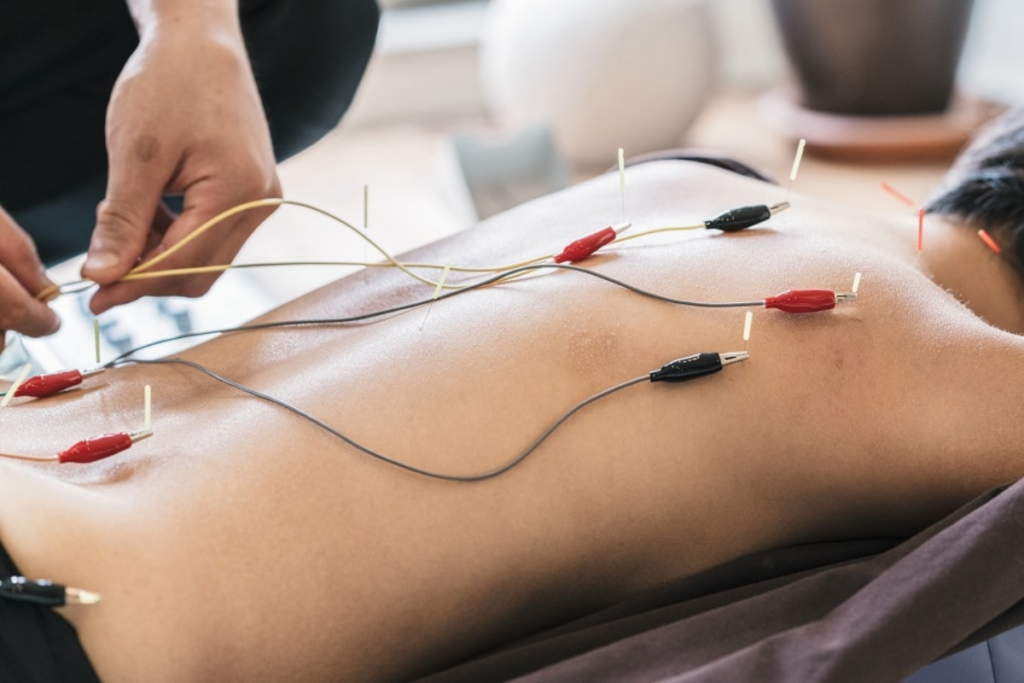
When used appropriately, microcurrent can enhance acupuncture sessions by introducing low-level electrical support through the needles. With the right accessories, such as a damper, specific lead wires, and gator clips, licensed acupuncturists can combine traditional acupuncture principles with targeted microcurrent frequencies to support the body’s healing response.
This approach is not for every practitioner.
Before we go further, note that this article is specifically for licensed acupuncturists. Having a microcurrent device, completing a certification, or practicing another form of holistic care does not authorize someone to needle clients. Always stay within your legal scope of practice and follow the laws and licensing requirements in your region.
For more on staying within ethical and professional boundaries, you may also find our article on professional ethics in holistic pain management helpful.
For licensed acupuncturists, however, microcurrent can offer a meaningful way to expand clinical options and support more complex clients.
Why Consider Microcurrent in Acupuncture?
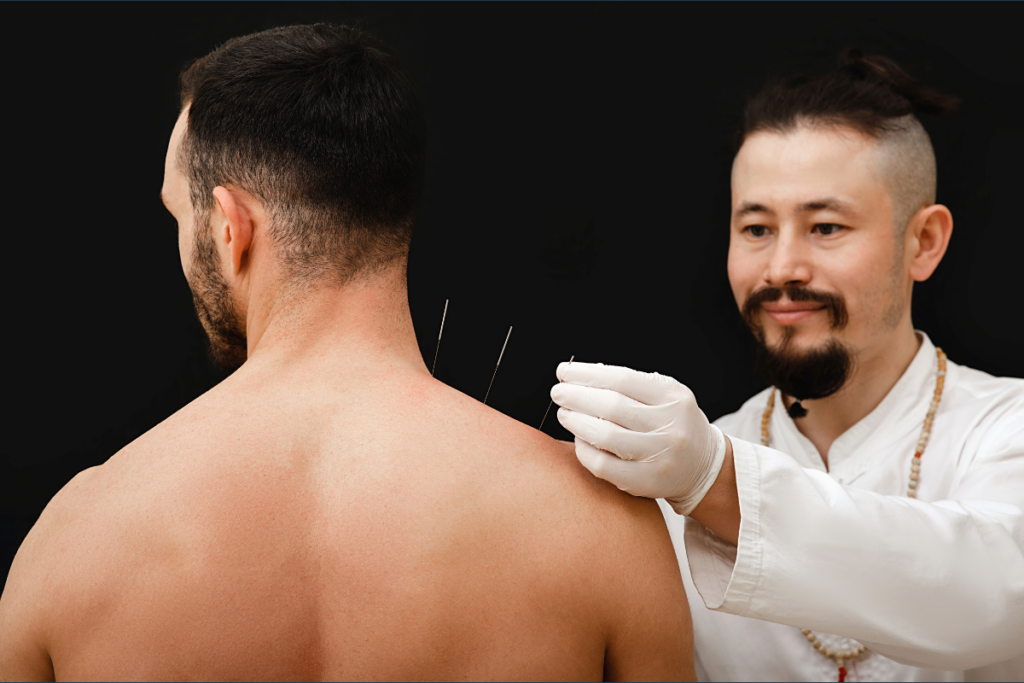
Licensed acupuncturists may consider adding microcurrent to their work for two primary reasons.
The first is to support the body’s qi, which we can describe in practical terms as the body’s “battery.” When clients are dealing with chronic illness, pain, inflammation, or long-standing dysfunction, their bodies may struggle to regulate and restore themselves effectively.
In this model, microcurrent helps support the body’s electrical communication and encourages a better healing response.
The second reason is frequency selection.
Microcurrent devices give acupuncturists the ability to introduce specific frequencies for specific therapeutic goals. This creates another level of precision within the treatment process, especially when working with chronic, complex, or difficult cases.
For practitioners who are newer to this modality, our guide to microcurrent therapy benefits offers a helpful overview of how microcurrent supports cellular function, inflammation, and recovery. You can also explore how it may support long-term pain cases in our article on microcurrent therapy for chronic pain management.
How Microcurrent Electroacupuncture Works
Traditional electroacupuncture often uses low voltage and higher amperage. For some clients, that can feel uncomfortable or intense.
Microcurrent electroacupuncture uses a different approach. Instead of sending a stronger current through the system, the goal is to use very low amperage while still delivering a therapeutic signal.
One helpful way to understand this is to compare it to a hose.
A low-voltage, high-amperage machine is like using a wide hose. More current is moving through the system. By contrast, using higher voltage with very low amperage is more like sending electrons through a much smaller opening, with the voltage acting as the pressure behind the signal.
This is where the damper, or resistor, becomes important.
Adding a damper between the microcurrent device and the needles helps reduce amperage even further. The result is a very small current with voltage behind it, creating a more comfortable experience for the client while still allowing the practitioner to deliver the intended signal.
In practice, this involves:
- A microcurrent device
- Specific lead wires
- A damper or resistor
- Gator clips
- Acupuncture needles
- A selected mode or frequency
- A comfortable power level for the client
If you are comparing device options for your work, our breakdown of the capabilities of our Avazzia Life Devices can help you determine which models best fit different levels of practice.
Again, this approach is only appropriate for trained, licensed acupuncturists.
Why Comfort Matters in Electroacupuncture
Client comfort matters because clients need to trust the treatment experience.
When clients hear terms like “electricity,” “voltage,” or “current,” they may immediately assume that the treatment will feel painful or unsafe. Explaining the difference between voltage and amperage in simple terms can help reduce fear.
A helpful way to explain it is this:
“We are using very low amperage, so the amount of current moving through the system is extremely small. The goal is not to force the body, but to introduce a gentle signal that supports regulation and healing.”
This kind of explanation helps clients understand what is happening without overwhelming them with technical detail. If you want a simple way to introduce microcurrent to clients, see our guide on how to explain microcurrent therapy to new clients.
Microcurrent, Meridians, and the Flow of Electrons
Microcurrent can also give licensed acupuncturists another way to think about meridians and therapeutic pathways.
From a traditional Chinese medicine perspective, meridians are central to understanding the movement of qi and the organization of the body’s energetic system. From a more modern anatomical perspective, some practitioners think about meridians in relation to fascia, connective tissue, and pathways where electrons may move more easily than through surrounding tissue.
This can create a useful bridge between traditional acupuncture theory and modern bioelectric concepts.
If pain or dysfunction exists along a pathway, the goal may be to support electron flow through that area, helping the body regulate inflammation and restore function.
This does not replace traditional acupuncture theory. Instead, it gives licensed acupuncturists another framework for understanding how microcurrent may enhance their work.
Using Scalar Energy Alongside Microcurrent and Acupuncture
Practitioners may also use scalar energy alongside microcurrent and acupuncture in certain clinical settings.
One way to think about scalar energy is as a supportive tool that may help reduce interference while the practitioner is sending a therapeutic signal into the body. If the body remains stuck in a pain or biological pattern that no longer serves it, scalar energy may help quiet that background interference as the practitioner applies microcurrent.
For example, a practitioner may place needles around a lower back segment and use a scalar device over the same area while delivering microcurrent through the needles.
Practitioners may also use scalar energy around GV20, the traditional “Hundred Meetings” point, when working with polarity and the body’s ability to accept input.
For more on this modality, read our article on scalar energy healing benefits. You may also find our guide to PEMF and scalar energy for pain resolution useful if you are exploring how multiple energy-based tools can work together in clinical practice.
Clinical Applications for Microcurrent Electroacupuncture
Practitioners may consider microcurrent electroacupuncture for a variety of clinical situations, depending on their training, scope, and the client’s presentation.
These examples are not guarantees of results. They are simply examples of how licensed acupuncturists may think about integrating microcurrent into more advanced treatment planning.
Joint Pain and Restricted Range of Motion
For joint pain, a licensed acupuncturist may use points around the affected joint while connecting selected needles to a microcurrent device.
For knee pain, for example, a practitioner may select points around the kneecap and related meridian points based on the client’s presentation. A practitioner may consider a frequency such as FM RSI when the goal is to support joint-related pain and mobility.
Lumbar Spine Problems and Sciatica
For lumbar spine issues or sciatica, a practitioner may place needles near relevant spinal segments based on their assessment and training.
Some practitioners may use frequencies such as 77 Hz or work with multiple device setups when addressing more complex spinal presentations. In certain cases, a practitioner may use two devices to treat different regions or create different frequency inputs.
Practitioners should use careful clinical judgment and only perform this type of work if they have training in both acupuncture and the device system they use.
Chronic Non-Healing Wound Support
In more advanced cases, microcurrent electroacupuncture may be used to support tissue repair and wound recovery.
A practitioner may place needles around the perimeter of a wound and use multiple devices or frequencies, depending on the case and their level of training.
This is a more complex application and should be approached carefully, with appropriate training, documentation, and coordination with the client’s broader care team when needed.
These examples show how microcurrent electroacupuncture may be used in advanced clinical situations, but they also reinforce the importance of training, scope, and clinical judgment.
For practitioners working with complex or long-standing cases, it is also important to consider factors that may affect response time, including medication history. Our article on what to do when patients are on heavy prescriptions explores how long-term medication use may influence healing and treatment expectations.
For chronic clients, structure also matters. You can learn more about that in our guide to annual care plans for chronic illness clients.
What Licensed Acupuncturists Should Consider Before Adding Microcurrent
Before adding microcurrent to an acupuncture practice, practitioners should consider several important factors.
Scope of Practice
Only licensed acupuncturists should use needles. Microcurrent training does not replace acupuncture licensure.
Training
Practitioners should understand their device, accessories, settings, safety considerations, and treatment goals before applying microcurrent through needles.
Client Education
Clients should understand what the treatment is, how it differs from other electrical stimulation tools, and what they may feel during treatment.
Informed Consent
Any use of electrical stimulation should be explained clearly. Clients should understand the nature of the treatment and have the opportunity to ask questions.
Comfort and Safety
Power levels should remain comfortable for the client. The goal is not intensity. The goal is effective signaling and therapeutic support.
If you are adding microcurrent to your clinical work, make sure your documentation and consent process are also aligned. Our article on how to craft a liability waiver for microcurrent therapy can help you think through what should be included.
It is also worth setting expectations clearly before treatment begins. Our guide on the holistic healing timeline and client expectations can help practitioners explain why healing is not always linear and why consistency matters.
Frequently Asked Questions
Can any microcurrent practitioner use needles?
No. This approach is only appropriate for licensed acupuncturists. Owning a microcurrent device or completing a microcurrent-related certification does not authorize a practitioner to needle clients.
What accessories are used for microcurrent electroacupuncture?
This approach may involve a microcurrent device, specific lead wires, gator clips, and a damper or resistor that helps reduce amperage between the device and the needles.
Is microcurrent electroacupuncture the same as traditional electroacupuncture?
Not exactly. Traditional electroacupuncture may use low voltage and higher amperage, which can feel more intense. Microcurrent applications may use higher voltage with very low amperage, especially when paired with a damper, creating a more comfortable experience.
Can scalar energy be used with electroacupuncture?
Yes. Scalar energy may be used alongside electroacupuncture to reduce interference and support the body’s response to the signal being delivered.
What types of clients may benefit from this approach?
Microcurrent electroacupuncture may be considered in cases involving joint pain, sciatica, spinal issues, or wound-support cases, depending on the practitioner’s training, scope, and clinical judgment. These examples should not be interpreted as guarantees.
Final Thoughts
For licensed acupuncturists, microcurrent can be a valuable addition to clinical practice.
By combining traditional needling with low-amperage electrical support, frequency selection, and in some cases scalar energy, practitioners may be able to enhance treatment sessions and support more complex clients.
The key is using the tool appropriately.
Microcurrent does not replace acupuncture training, clinical reasoning, or legal scope of practice. But in the hands of a licensed acupuncturist, it may provide another meaningful way to support the body’s natural ability to regulate, recover, and heal.
Watch the Full Podcast Episode
This article was inspired by Dr. Rob Vanbergen’s conversation with Dr. Laura Christensen on the Pain Free for Life podcast.
To hear the complete discussion and clinical examples, watch the full podcast episode here:
Electro-Acupuncture & Advanced Healing: Dr. Laura Christensen on Restoring Energy and Relieving Pain
You can also watch the episode on YouTube here:
Watch the podcast episode on YouTube
A full electroacupuncture set-up can be purchased here on The Sana Shop:

